

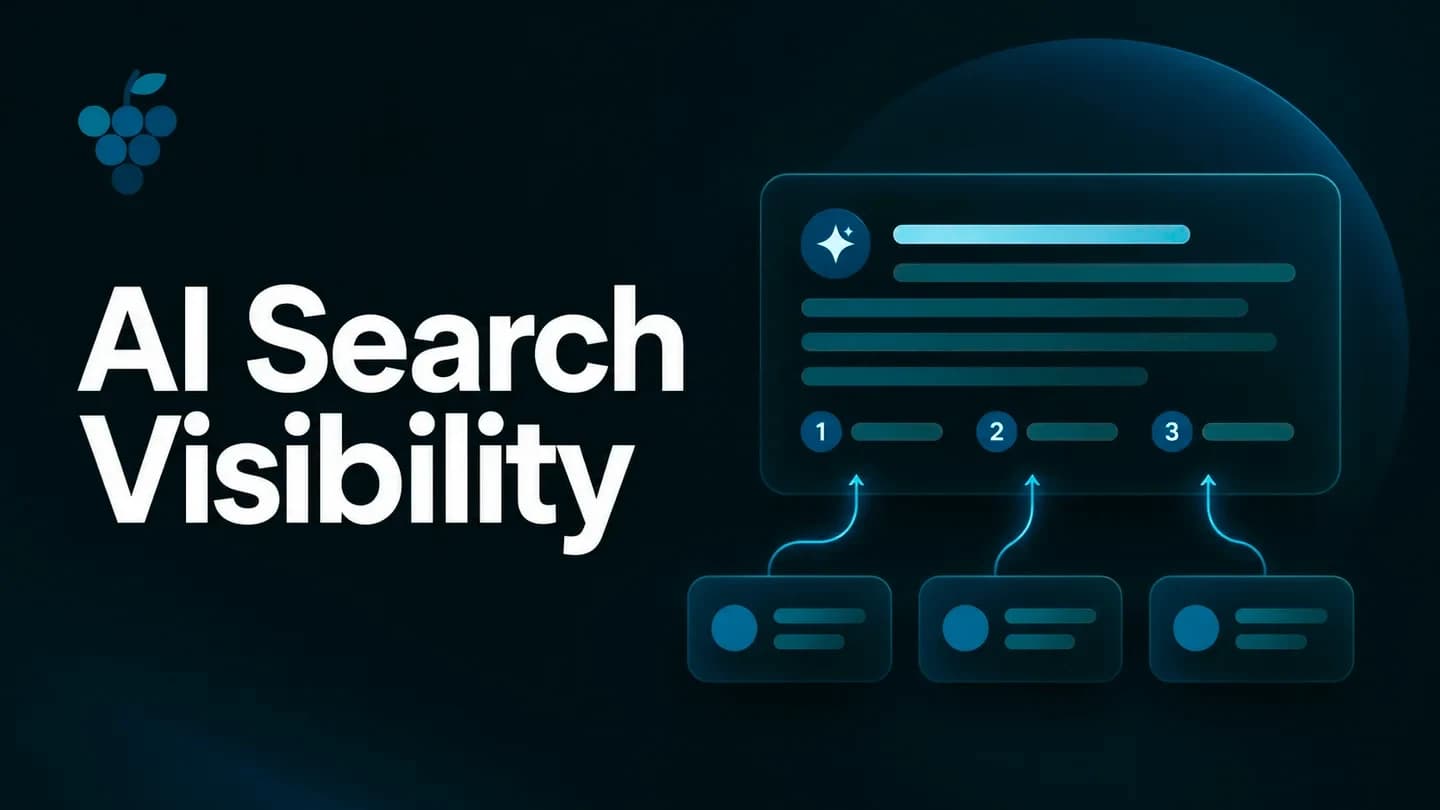
Understand what AI-search visibility means
AI-assisted search can summarise information, compare options, recommend follow-up questions and cite supporting pages. For a SaaS company, visibility may mean a linked citation, an attributed brand mention, inclusion in a shortlist or simply language that helps a buyer recognise the category. These outcomes are not identical, so a strategy needs more precision than “rank in AI.”
There is no guaranteed optimisation switch. Search systems still need to discover, render, index and understand public content before it can become a useful source. Technical eligibility, helpful information and a clear website remain the foundation. Special files or artificial question variations cannot compensate for inaccessible pages or unsupported claims.
Define the situations in which the brand deserves to appear. A payroll platform may have credible expertise in compliance workflows, integrations and implementation, but not every broad topic about employment. This boundary focuses investment on questions where product knowledge, customer experience and original evidence can create a meaningful contribution.
How can a SaaS product entity become unambiguous?
Search and answer systems need consistent signals about what the product is, who it serves and how it differs. Keep company, product, category and feature language aligned across the homepage, product pages, documentation, author profiles, structured data and trusted external listings. Clear language is a retrieval advantage because it reduces the number of interpretations a system must reconcile.
Write a canonical product description for internal use. Define the category, primary audience, jobs solved, delivery model, important capabilities, supported markets and terms that should not be used. This does not mean repeating one sentence everywhere. It gives teams a shared factual model they can express naturally in different contexts.
Resolve naming collisions and brand ambiguity. If the company and product have different names, state the relationship. If a feature uses a common term with several meanings, define it near the first mention. Maintain organisation, product and author structured data where appropriate, but remember that markup should describe visible, accurate information rather than introduce claims the page does not support.
Map the questions buyers ask
AI-search journeys often expand one question into several related investigations. A buyer asking for a tool recommendation may need to clarify company size, workflow, integrations, security, budget and implementation constraints. Build content around these real decision variables instead of producing a separate thin page for every possible wording.
Collect questions from sales calls, support tickets, product demos, community discussions, site search and Search Console. Group them by underlying task: understand a problem, choose an approach, compare products, validate risk, implement a solution or troubleshoot. Then identify the page type best suited to each task.
Prioritise questions where the company can add first-hand knowledge. Product telemetry, anonymised implementation patterns, migration experience and expert analysis are harder to replace than a generic definition. The goal is not maximum coverage. It is a coherent body of useful information that gives a system a reason to retrieve your brand for relevant situations.
- Which decision is the user trying to make?
- What constraints materially change the answer?
- What evidence would make the answer trustworthy?
- Which part can the company explain from experience?
- What should the reader investigate next?
Which claims are credible enough for AI answers to cite?
Generic claims are easy to reproduce and difficult to trust. Original data, documented methods, product evidence, expert authorship and transparent limitations give an answer system stronger material to reference. Replace “dramatically improves productivity” with a specific mechanism, measurement window and result when you have the evidence.
Create an evidence register for statistics and important product claims. Record the source, owner, collection method, sample, date, limitations and approved wording. Link to accessible primary sources where readers can verify external facts. If a number comes from company data, explain what was measured without exposing private customer information.
Distinguish facts, interpretations and recommendations. A legal requirement is different from a practitioner’s preferred workflow. A product capability is different from a planned feature. Clear qualifiers improve trust and prevent summaries from stripping away essential conditions. Update or remove claims when their supporting evidence expires.
- Define specialist terms and processes precisely
- Support statistics with accessible primary sources
- Explain how original conclusions were reached
- Keep author and update information visible
- State limitations and exceptions near the claim
Create non-commodity information
A summary of pages that already exist gives retrieval systems little reason to select a new source. Non-commodity content adds something the audience could not obtain by combining the first few results: first-hand experience, original analysis, a useful dataset, a tested framework, a detailed example or a clearly argued point of view.
SaaS companies have underused source material. Product teams understand edge cases, support teams know recurring failures, sales engineers hear technical objections and customer-success teams see adoption patterns. Turn that knowledge into content through structured interviews and review. Remove confidential details, but preserve the operational insight that makes the explanation distinct.
Demonstrate the work. Show calculation methods, decision criteria, before-and-after workflows, annotated examples and conditions where an approach fails. Screenshots and diagrams can help when paired with textual explanation. A polished opinion without evidence is still easy to imitate; a transparent method becomes a durable reference.
How should content balance answer extraction and depth?
Concise answers help retrieval, but shallow pages rarely earn durable visibility. Begin each section with a direct response, then provide the mechanism, evidence, examples and conditions required to justify it. Descriptive headings and short opening sentences make information easy to locate without reducing the article to disconnected snippets.
Keep terminology stable within a page and explain synonyms where they matter. Use lists for genuine sets or steps, tables for comparisons and prose for reasoning. Give every page one primary purpose, then link to dedicated pages for adjacent tasks. This structure helps readers scan while preserving enough context for careful understanding.
Avoid padding articles to reach an arbitrary length. Depth comes from resolving the important uncertainties around a task. A complete integration guide may need prerequisites, permissions, data flow, setup, validation, limitations and troubleshooting. Once those needs are met, more repeated wording does not improve the answer.
Build a citation-worthy source ecosystem
Visibility is not created by on-site content alone. Buyers and search systems encounter software through review platforms, partner directories, documentation, communities, research, podcasts and expert commentary. Keep core facts accurate across profiles and make valuable company research easy for journalists, analysts and practitioners to reference.
Earn mentions by contributing useful information, not by manufacturing identical listings. Publish research with a clear method, provide experts who can answer specialist questions and create resources that partners genuinely need. When external descriptions are wrong, correct high-impact sources through their normal editorial processes.
Do not attempt to control every mention or seed undisclosed promotion. Independent sources are valuable precisely because they have their own standards and perspectives. A healthy ecosystem contains consistent facts but varied opinions. The long-term goal is a verifiable reputation connected to real expertise.
Keep technical access and page experience strong
AI features do not remove ordinary search requirements. Important pages need stable URLs, successful responses, indexable directives, crawlable links and content that appears in rendered HTML. Use canonical URLs consistently, include indexable pages in XML sitemaps and prevent application or parameter routes from diluting the public information architecture.
Server rendering or static generation can reduce reliance on delayed client-side execution. Test pages with Search Console inspection and rendered-HTML tools, especially after framework or component changes. Ensure primary content does not require login, interaction or a browser capability unavailable to crawlers.
Page experience matters for the people who follow a citation. Keep layouts readable on small screens, distinguish main content from promotions, compress media and avoid intrusive overlays. A mention that leads to a slow or confusing page wastes the trust earned upstream and makes conversion less likely.
How should SaaS visibility in AI answers be measured?
AI-search journeys can influence discovery without producing a traditional organic click every time. Monitor referrals that expose a source, but also track branded search, direct visits, assisted conversions, cited pages, sales-call mentions and the questions for which the brand appears. Use a consistent observation set because results can vary by wording, location, account and time.
Separate presence, accuracy and business value. A brand can be mentioned frequently with the wrong positioning, or cited correctly for questions that never reach qualified buyers. Review whether descriptions are factual, whether the linked page supports the answer and whether visitors continue to meaningful product actions.
Treat visibility monitoring as directional research, not an exact rank tracker. Record prompts and conditions, sample regularly and avoid reacting to single outputs. Combine observations with Search Console and customer evidence to identify unclear entities, missing proof and content gaps worth addressing.
Run AI visibility as an operating programme
Assign owners for entity facts, expert review, original research, technical access and measurement. Create a publishing workflow that verifies claims, records sources and schedules updates. Product changes should trigger revisions across marketing pages, documentation and major external profiles so the public record remains consistent.
Work in focused clusters. Choose one valuable buyer situation, audit what the market can currently learn, improve the central product and educational pages, add missing evidence and strengthen relevant external relationships. Measure the cluster before expanding. This produces clearer learning than publishing dozens of speculative AI-targeted pages.
The durable strategy is straightforward even if execution is demanding: be understandable, accessible, specific and worth referencing. SaaS brands earn visibility when they contribute reliable information that helps people make better decisions. Optimising only the surface wording may win a temporary mention; building a credible knowledge system creates compounding discovery across search, AI interfaces and human recommendations.
Use a ninety-day implementation plan
In the first month, establish the baseline. Audit product descriptions, entity identifiers, authorship, crawlability and the pages already cited or mentioned for valuable questions. Interview sales, support and product teams to identify expertise the public site does not express. Choose one buyer situation with clear commercial relevance and available evidence.
In the second month, improve the cluster. Align the central product page, publish or update the supporting explanations, add original examples and verify every important claim. Repair internal links and technical access. Update high-value external profiles with accurate facts, and give partners or journalists a clear primary source when company research is relevant.
In the third month, observe and refine. Sample a stable set of questions across the interfaces your customers use, review citations and descriptions, and compare branded demand, qualified referrals and assisted journeys. Correct factual ambiguity and strengthen missing evidence, but do not rewrite pages after every volatile response.
At the end of the cycle, decide whether the cluster deserves continued investment and apply the learned process to the next one. This cadence keeps AI visibility tied to customer value and editorial quality. It also produces useful search assets even when a particular answer interface changes, because the underlying work improves how the market understands and verifies the SaaS brand.
Include a correction route in the programme. Customers, partners and employees should be able to report outdated product facts, broken evidence or misleading descriptions. Route each report to an accountable owner, verify it against a primary source and update all affected pages, not only the URL where the problem was noticed. Accuracy maintained across the full source network is more valuable than a one-time optimisation sprint.
Keep leadership expectations realistic. No provider can promise inclusion, wording or placement in generated answers, and appearances will fluctuate. The controllable work is to publish distinctive information, maintain technical access, clarify the entity and measure qualified outcomes. That discipline protects the programme from expensive tactics built around unverified shortcuts.